
Easy to use in daily work. Powerful enough to run serious workforce operations.
The C3 platform stays clean and guided on the surface while supporting workforce, payroll, billing, document, and compliance operations underneath.
Built for real operations
Everyday work stays simple while serious operational control stays available underneath.
- Client, worker, and internal portals with tailored dashboards
- Document generation, e-sign, archive, and retrieval flows
- Fulfillment tracking, project views, and labor progress reporting
Experience advantage
The platform stays guided, intuitive, and operationally capable.
The platform reduces friction for clients, workers, and internal teams without flattening the complexity of the underlying business.
One operating picture
One operating picture
Clients, workers, and internal teams work from the same operational picture instead of fragmented spreadsheets and inbox chains.
Easy for the common path, powerful for the complex path
Easy for the common path, powerful for the complex path
Guided flows, wizards, and structured defaults make common tasks easy, while advanced workbenches still support deeper operational control.
Maintainable by design
Maintainable by design
The platform is structured so changes, templates, workflows, exports, and permissions evolve cleanly without creating brittle admin overhead.
What the system includes
Key platform features work together inside one operating environment.
The feature set is intentionally broad enough to support workforce operations from first request through payroll, billing, archive, and reporting.
Operational visibility
Operational visibility
- Role-based dashboards for C3, clients, and workers
- Outstanding actions, approvals, signatures, and document tasks in one place
- Archive, download, and audit-ready document history
Structured process control
Structured process control
- Guided onboarding, requisition, and issue workflows
- Change-control, approvals, and fulfillment tracking
- Project, cost-center, and budget-aware views
Role-based usability
Role-based usability
- Worker self-service for pay, reimbursements, assignments, and support
- Client account views for billing, labor status, and project progress
- Internal workbenches for exceptions, collections, and compliance operations
Enterprise-ready integration
Enterprise-ready integration
- Exports to accounting and specialized finance systems
- Jurisdiction-aware payroll and remittance architecture
- Separate but coordinated payroll, billing, expense, and finance-core models
Visual system view
A practical view of the platform underneath the service model.
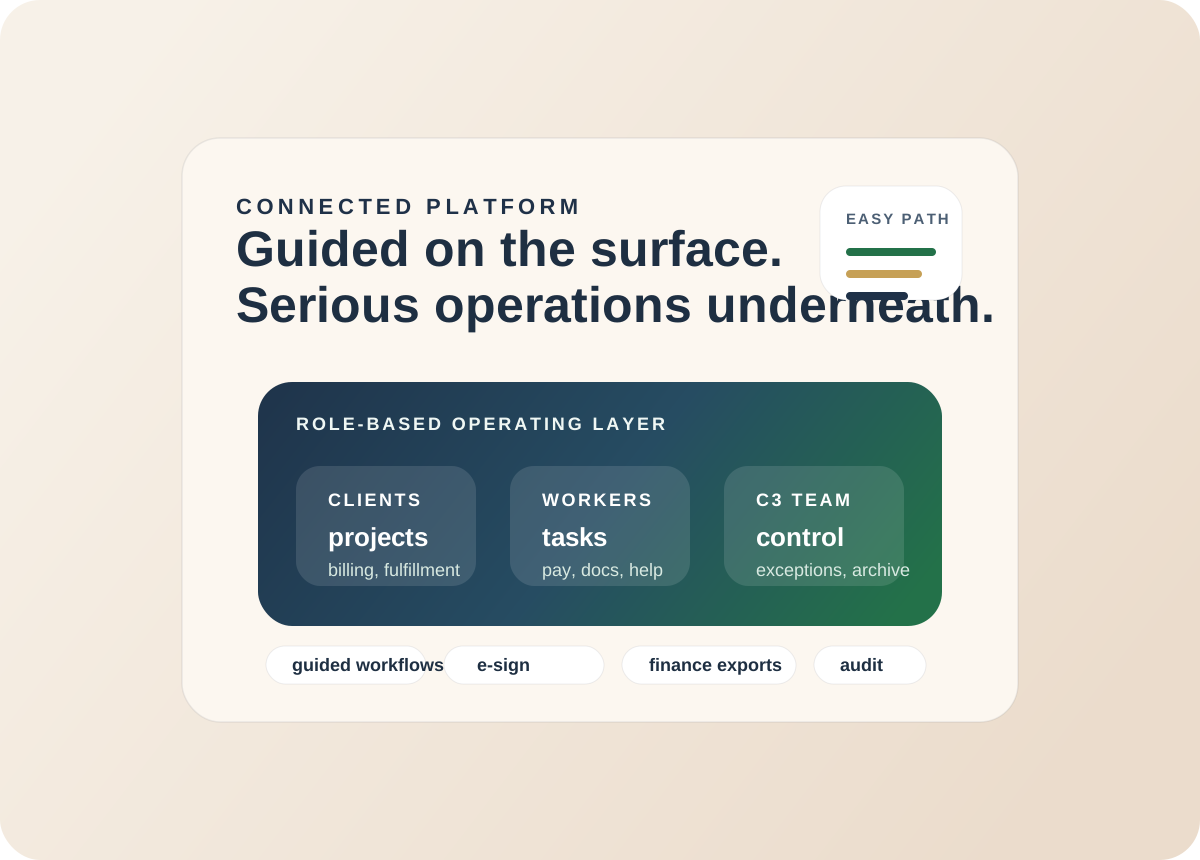
The platform advantage stays visual and structural instead of abstract. This illustration shows how guided flows and deeper operational systems coexist in one product family.
Platform view
Guided experiences on the surface, serious workforce operations underneath.
A branded system view showing how role-based experiences, guided workflows, and deeper operational controls work together.
Maintenance advantage
Maintainability is built into the product, not bolted on later.
Ease of use lasts because the system is stable, maintainable, and able to grow cleanly over time.
- Role-based permissions and tenant-aware architecture keep client environments separated cleanly
- Templates, rule packs, and configurable workflows reduce one-off custom code
- Clear audit trails, versioning, and change control make operations safer to maintain
- Static public site plus separate secure portal keeps hosting and deployment cleaner
- Exports and adapters allow specialized finance or external systems to plug in where needed
Next step